
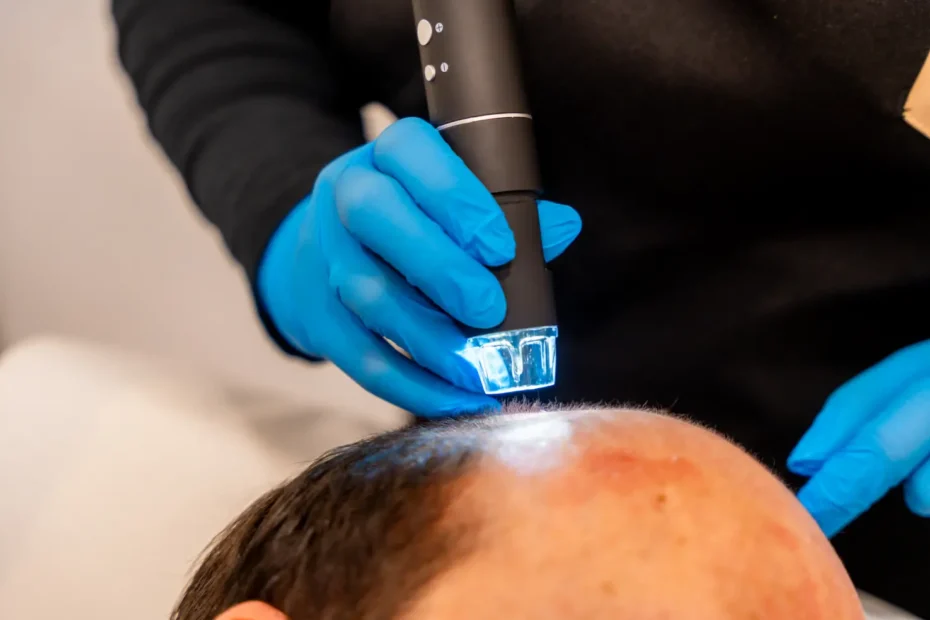
Thinning hair can make the scalp more visible, especially around the hairline, crown and other areas where hair density has decreased. Scalp micropigmentation is a non-surgical cosmetic procedure that places small amounts of pigment on the scalp to create the appearance of individual hair follicles. This can make areas with reduced hair density appear fuller without adding new hair.
Scalp micropigmentation does not grow new hair or replace lost follicles. Instead, it changes the visual appearance of the scalp and existing hair. This guide explains how scalp micropigmentation for thinning hair works, who may consider it, what happens during the treatment and what to know about aftercare.
Quick Summary: Scalp Micropigmentation for Thinning Hair
- Makes Thinning Areas Appear Fuller – Small pigment deposits can make areas with reduced hair density look less exposed and more filled in.
- Helps Reduce Visible Scalp – Pigmentation can make the scalp less noticeable around areas such as the hairline and crown where thinning is visible.
- Does Not Regrow Hair – Scalp micropigmentation is a cosmetic procedure and does not create new follicles or stimulate hair growth.
- May Suit Different Hair Loss Patterns – It may be considered for visible thinning and certain types of hair loss, depending on the individual’s scalp, existing hair and treatment goals.
- May Require Multiple Sessions – The number of scalp micropigmentation sessions can vary according to the treatment area, degree of thinning and desired appearance.
How Does Scalp Micropigmentation Work?
When hair becomes thinner, more of the scalp can be seen between the remaining hairs. This can make reduced density more noticeable, particularly around the crown and front hairline.
During scalp micropigmentation treatment, small amounts of pigment are placed at selected points on the scalp. These points are designed to resemble individual hair follicles and work with the surrounding hair.
The pigment shade, placement and density can be considered according to factors such as hair colour, skin tone, hairline and the extent of thinning. The aim is to create a subtle appearance rather than a uniform layer of colour.
Unlike a hair transplant, scalp micropigmentation does not involve moving hair follicles from one part of the scalp to another. It is a cosmetic approach intended to improve the appearance of areas affected by thinning or hair loss.
Can Scalp Micropigmentation Make Thin Hair Look Fuller?
Yes. Scalp micropigmentation for thinning hair can make areas with reduced density appear fuller by making the scalp less noticeable between existing hairs.
For example, thinning around the crown can leave more skin visible between the remaining hair. Carefully placed pigment can make these gaps less prominent and give the area a denser appearance. A similar approach may be used around the hairline or other areas where thinning is visible.
The effect is cosmetic rather than a form of hair regrowth. The treatment changes the appearance of the scalp without increasing the number of hair follicles.
Who May Consider Scalp Micropigmentation?
Scalp micropigmentation may be considered by people who are concerned about visible thinning and want to change the appearance of exposed areas of the scalp.
People with early or moderate thinning may want to make the scalp less noticeable while keeping their existing hairstyle. Those with more extensive hair loss may prefer a closely cropped hairstyle, where follicle-like pigmentation can complement shorter hair.
It may also be considered following a hair transplant in certain situations, such as when someone wants to improve the appearance of an area or make particular scars less noticeable.
Suitability varies between individuals. The hair loss pattern, scalp condition, existing hair and expected appearance should all be considered before proceeding with scalp micropigmentation treatment.
What Happens During Scalp Micropigmentation Treatment?
The process usually starts with an assessment of the scalp and a discussion about the desired appearance. The treatment areas, hairline and pigment shade can then be planned.
During the procedure, small pigment deposits are placed at selected points across the scalp. Their size and positioning are intended to resemble individual follicles rather than create a uniform block of colour.
The number of scalp micropigmentation sessions can vary. Some people may require more than one appointment depending on the treatment area, degree of thinning and desired appearance. Allowing time between sessions also gives the scalp an opportunity to settle before further treatment is considered.
For more information, visit the clinic’s scalp micropigmentation service page.
Can Scalp Micropigmentation Look Natural?
The final scalp micropigmentation results can be influenced by factors such as pigment shade, placement, hairline design and the person’s existing hair.
The aim is to recreate the visual pattern of individual follicles rather than leave an obvious block of pigment on the scalp. Hairline design can also affect the overall appearance.
The finished result can vary between individuals. How the pigment settles, skin characteristics, existing hair and aftercare may all influence the appearance over time.
What Should You Know About Aftercare?
The scalp needs time to settle after the procedure. Following the aftercare instructions provided by the clinic is an important part of the treatment process.
Guidance may include how to care for the treated area during the early healing period and which activities to avoid while the skin settles. Following these instructions can support the healing process.
The pigmentation may also change gradually over time. Factors such as sun exposure and individual skin characteristics can affect its appearance. Some people may choose to have a touch-up in the future depending on how the pigmentation changes.
Is Scalp Micropigmentation an Option for Hair Loss?
Scalp micropigmentation for hair loss may be considered by people who want to reduce the visible appearance of thinning without undergoing a surgical hair restoration procedure.
It is important to understand that the procedure does not treat the underlying cause of hair loss. It does not produce new follicles or stimulate hair growth. Its purpose is to change the appearance of areas where thinning or hair loss is visible.
The appropriate approach can vary according to the type and extent of hair loss, scalp condition, existing hair and individual expectations.
If you are considering scalp micropigmentation in Malaysia, an individual assessment can help determine whether this cosmetic procedure is appropriate for you.
People Also Ask About Scalp Micropigmentation
Can scalp micropigmentation make thinning hair look fuller?
Yes. Scalp micropigmentation for thinning hair can make areas with reduced density appear fuller by making the scalp less noticeable between existing hairs. It creates a cosmetic effect rather than adding new hair.
Is scalp micropigmentation good for thinning hair?
It may be considered by people with visible thinning who want to change the appearance of exposed scalp. Suitability depends on factors such as the hair loss pattern, scalp condition, existing hair and desired appearance.
Does scalp micropigmentation grow new hair?
No. Scalp micropigmentation does not stimulate hair growth or increase the number of hair follicles. It is a cosmetic procedure intended to change the visual appearance of the scalp.
How many sessions are needed for scalp micropigmentation?
The number of scalp micropigmentation sessions varies according to the treatment area, degree of thinning and desired appearance. Some people may require more than one session.
Does scalp micropigmentation look natural on thinning hair?
It can create a natural-looking appearance when the pigment shade, placement and hairline are carefully planned to work with the person’s existing hair. Individual scalp micropigmentation results can vary.
Explore Scalp Micropigmentation in Malaysia
Visible thinning can make more of the scalp noticeable between existing hairs. Scalp micropigmentation offers a non-surgical cosmetic approach that can change this appearance by recreating the look of individual hair follicles.
If you are considering scalp micropigmentation in Malaysia, contact the clinic to discuss your hair loss concerns and learn more about the treatment and whether it may be appropriate for you.